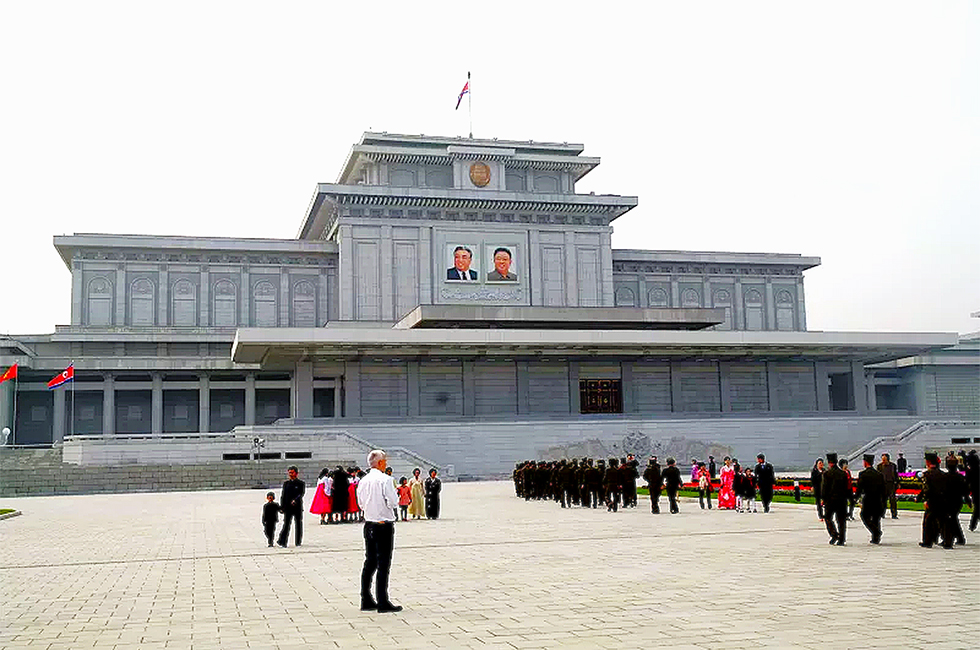


This study examines Pyongyang’s urban architecture as a strategic medium for visualising State ideology and political authority. It traces the transformation of the city’s architectural landscape from the monumental Juche architecture of the 1970s-1990s to the emergence of green architecture under Kim Jong-Un since the 2010s. During the Juche era, large-scale monuments, axial urban layouts, and ceremonial squares – exemplified by Kim Il-Sung Square, the Juche Tower, and the Kumsusan Palace of the Sun – materialised leader-centred authority and reinforced socialist ideological narratives. In the contemporary period, North Korea has introduced elements of environmental sustainability and technological modernisation into its urban development policies. Projects such as Mirae Scientists Street, Ryomyong Street, and the Pyongyang Sci-Tech Complex demonstrate how ecological discourse and scientific advancement are integrated into the symbolic language of political architecture. Rather than representing a rupture with earlier architectural ideology, these developments reinterpret the visual logic of Juche architecture within a new framework of modernisation and environmental aesthetics. By conceptualising architecture as a visual infrastructure of power, this study argues that Pyongyang’s urban landscape functions as a spatial apparatus through which ideological authority has materialised, been perceived, and been reproduced. Through a multidisciplinary approach integrating architectural history, urban studies, and political aesthetics, the article contributes to a broader understanding of socialist urbanism and the spatial visualisation of ideology.